Written By: Eniola Sultan Olatunji

Football is undoubtedly the biggest sport in Nigeria so, it is no surprise that the average Nigerian youth dreams of a career earning millions to “kick a ball”. For a lot of Nigerians, this is fueled by a passion to win and accomplish great things but to a good extent, it is seen as an escape route from the otherwise mundane corporate lifestyle an academic path yields. However, in recent times, there is an increasing emphasis on the importance of education for Nigerian footballers with players now actively pursuing degrees in subjects both connected to and separated from sports. In this article, we will further explore the challenges faced by Nigerian footballers when they combine sport and studies.
Several factors play major roles in the challenges faced, one of the primary ones being the pressing nature of professional football. Players often have rigorous training sessions, matches and travel schedules that leave little time for an academic pursuit. To add, many young players are scouted and signed professionally to clubs while still in their formative years, effectively disrupting their formal education. This easily leads to a lack of academic foundation and a general apathy towards academics making it difficult to catch up later in life.
Waidi Akanni, a former Super Eagles player recounted the sacrifices required, as he missed the 1990 World Cup to complete a master’s program but despite these challenges, he remains an advocate for dual career pathways, stressing the empowerment academics gives athletes in making informed decisions, managing their finances and preparing for fulfilling life after football.
Finances pose a similar and also significant challenge as many Nigerian footballers come from underprivileged backgrounds and rely solely on football for their income and the income of their family, both nuclear and extended. Many of their family members see them as sailors and turn them into cash cows running to them for their every need. Also, a lack of inadequate infrastructure and support systems hinder the academic growth of young Nigerian players as many football academies do not prioritise education and worse still, there are fewer opportunities for players to get proper mentorship and tutoring.

In response to some of these challenges, some programs have been created to help integrate academics and sports, offering Nigerian footballers access to structured training alongside their academic pursuits. For example, there are partnerships between Coventry City Football Club and institutions in the United Kingdom like Loughborough College to provide Nigerians students a chance to enrol in academic programs. The initiative also gives talented youngsters scholarships and full-degree pathways, allowing an easy balance between training and coursework.In local universities, The Nigerian Football Federation has introduced scholarships to fund education for young players. The aim is to ensure that players in the U-20 and U-17 national teams have the opportunity to complete their secondary and possibly tertiary education. Recently, about 15-20 of these footballers have annually benefited from these scholarships allowing a good balance between sports training and academics. There is also GSEP, the Grassroots Sport and Education Program that was launched to collaborate with private educational institutions to integrate academics into grassroots football academies. Early statistics indicate that over 40% of the participants in this program end up pursuing higher education while maintaining a sports career.
There are also corporate sponsors like Guaranty Trust Bank, (GTB) and PepsiCo Nigeria that have created scholarship initiatives for student-players. GTBank’s “Scholar-Athlete” program, for example, offers annual scholarships to 50 of the best student-athletes who succeed in displaying exceptional academic as well as athletic performances, with career counselling and mentorship in addition to financial support.
Examples set by Nigerian players like Rasheedat Ajibade who first completed a degree in accounting before football is crucial to motivate our next generation.
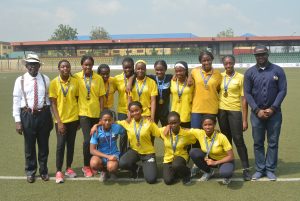
The benefits of combining sports and studies are numerous though, such as providing a solid plan for life after football, equipping players with the skills and academic know-how to succeed in diverse fields. Getting a university or college degree can open many lucrative doors in business, management, coaching and many other areas. It also improves lifelong skills like critical thinking, problem solving and communication of ideas.
Studies have also shown that good academic performance can also greatly affect their on-field performance as well with research showing that athletes who excel in both sports and academics tend to have higher levels of self-discipline, motivation and time management skills. These qualities almost always translated to an improved on-field performance.
Studies also show that former athletes with college degrees have an 80% higher employment in non-sporting industries than those without one post-retirement.
According to Global Sports Institute, former athletes with a degree earn 25 to 40% higher than their counterparts who did not get a degree. Data from African Sports Report also indicate that Nigerian athletes with degrees in business, law or management easily moved in leadership roles post retirement as well as started their own businesses, ensuring financial security and a prolonged socio-economic impact.
Some of the footballers who have successfully combined education and sports include Sunday Oliseh, who earned a degree in Physical and Health Education before venturing into coaching and management, successfully managing teams like the Togo and Nigerian National Teams. Efe Ambrose, who is a psychology graduate was able to balance his studies with his football career proving the integral importance of personal development even in a sporting career. Wilfred Ndidi who plays for Leicester City balanced his career with a degree in Business Management at De Montfort University in the United Kingdom. Obafemi Martins, a former Super Eagles striker graduated from Harvard with a degree in Entrepreneurship and Emerging Markets, demonstrating the potential for athletes to succeed academically even with their career commitments
#sportseducation #sports360nja #nigeriafootballers